Cemetery flowers
Martin Žák
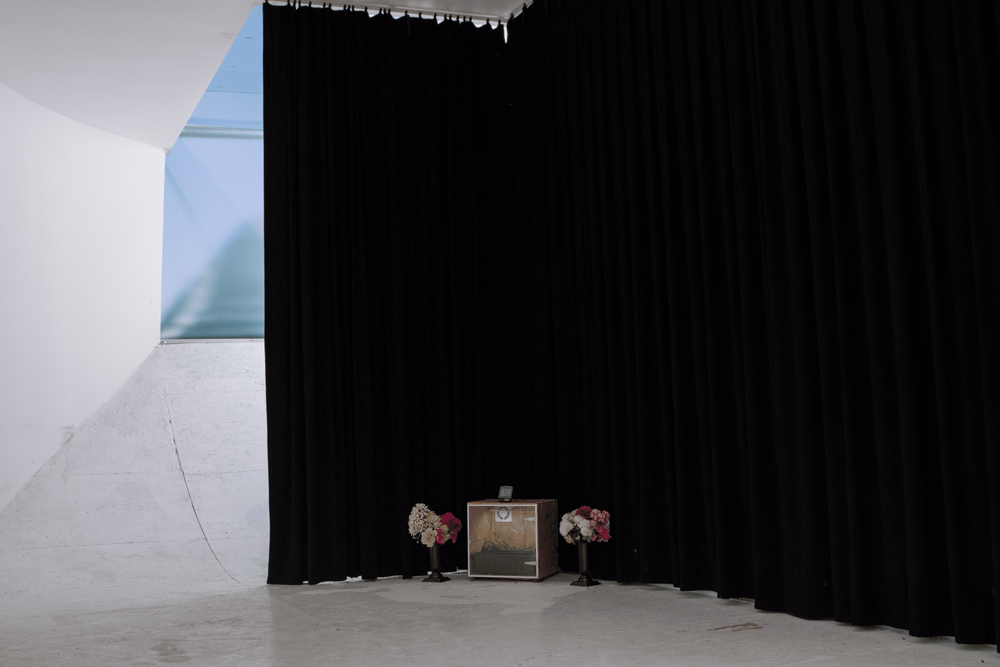
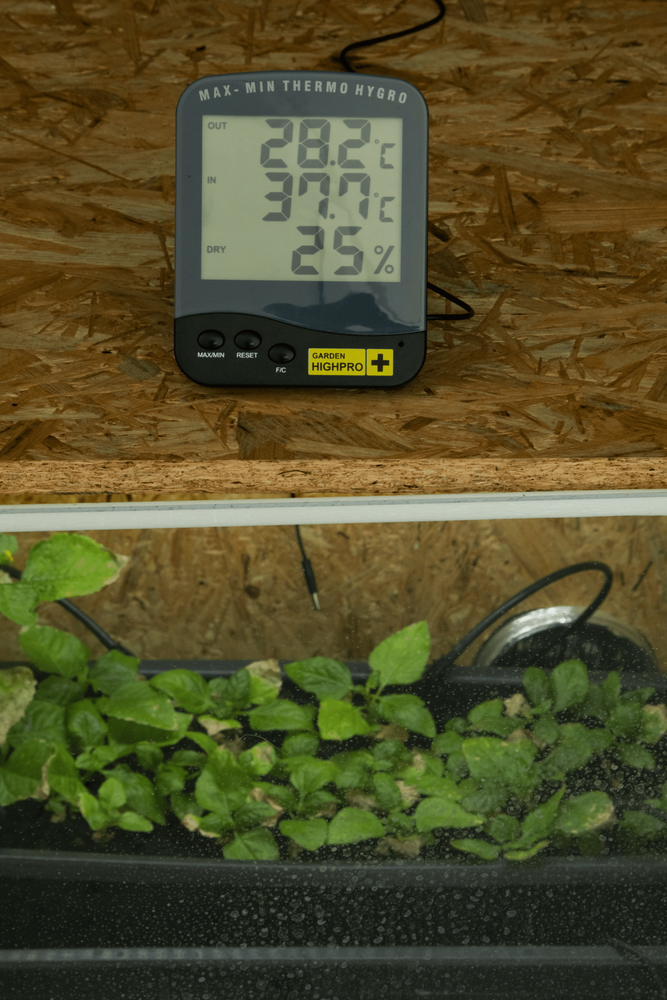
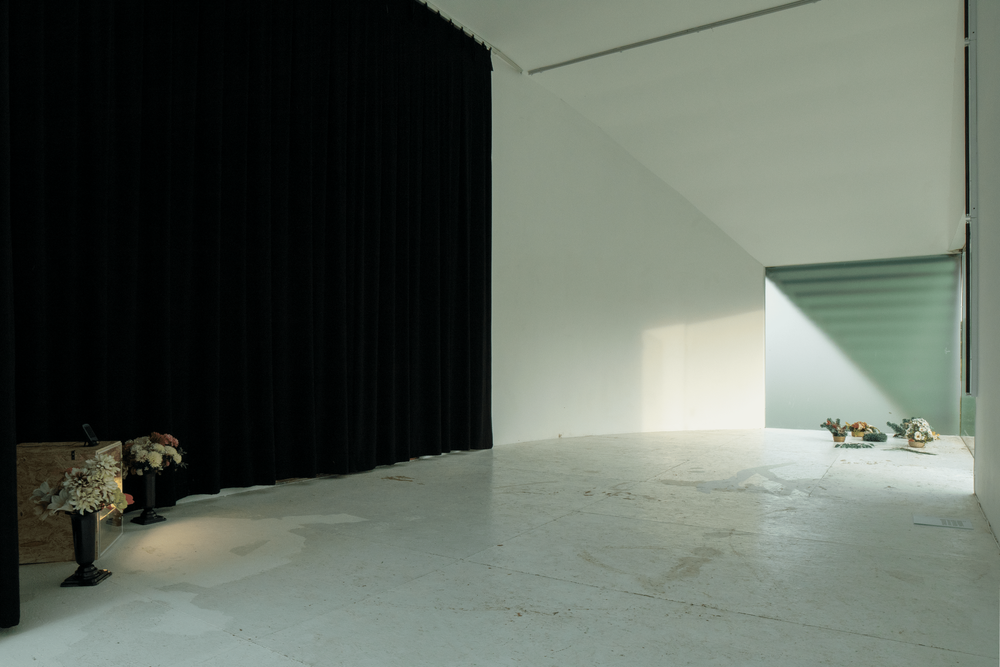
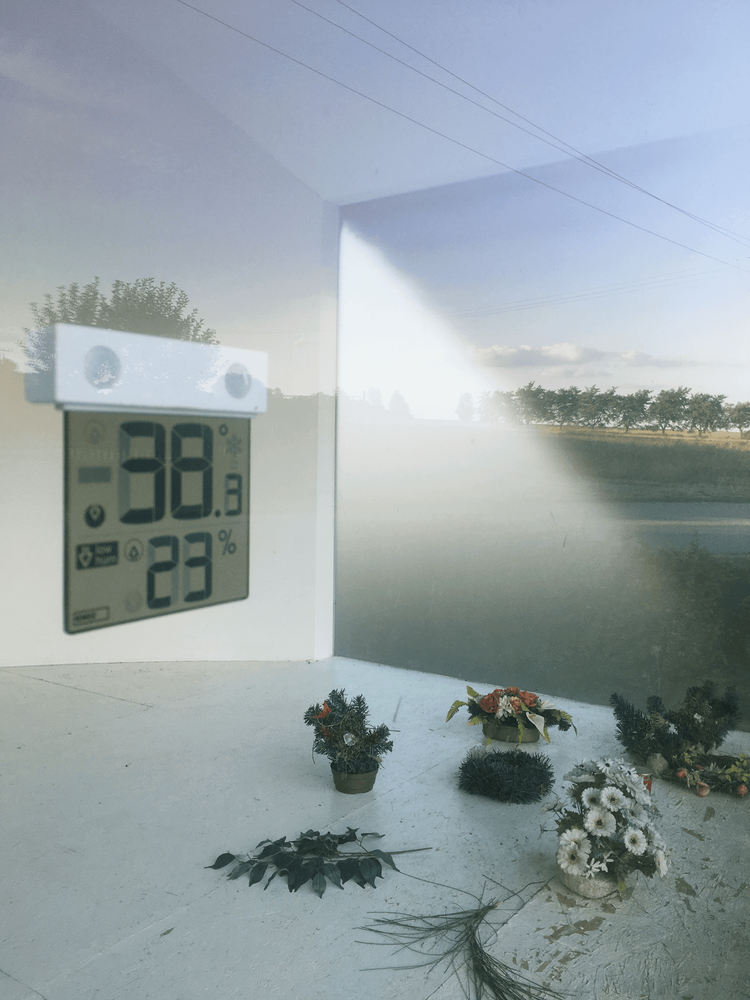
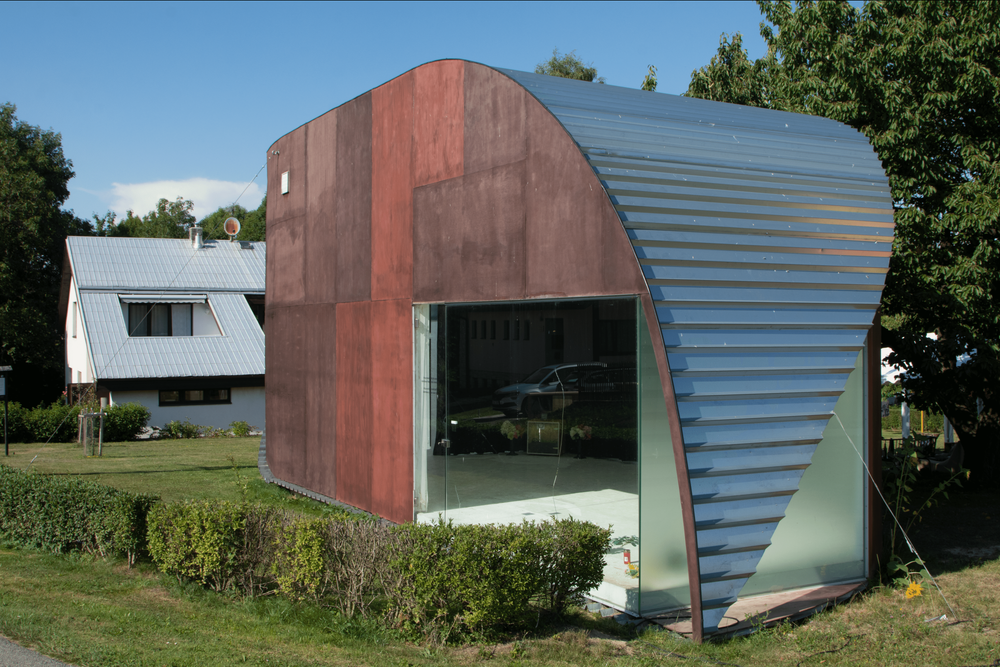
With the rising global temperature, and the associated melting of the glaciers, the theme of a global flood is reappearing, and with it the biblical story of Noah and his ark, on which he was to save his family and a couple of every member of the fauna. However, the Ark gallery building, which resembles a flat-bottomed ship in appearance, heats up above 50 degrees Celsius in the height of summer, in which the exhibition is set, and thus, from a biblical symbol of life and survival becomes a symbol of thermally accelerated perishing.
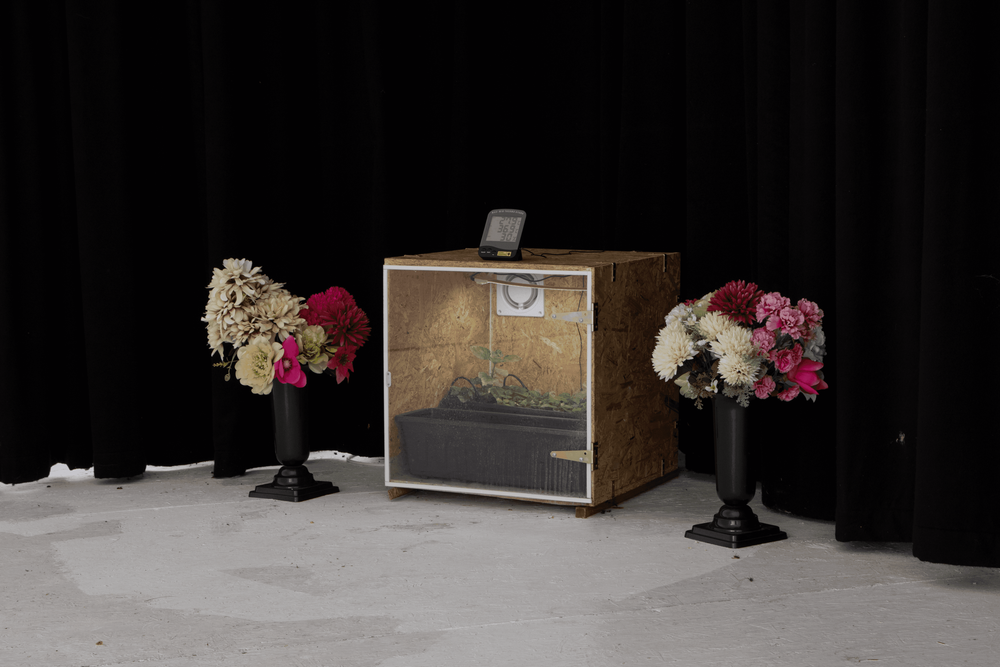
While the ark in biblical mythology is a symbol of life, redemption and the chance for a new beginning, the ark in the Pupil narrative marks a ticket to hell, where hi-tech cultivation practices try to ignore global warming and the resulting unfavourable conditions for natural flora. But after a potential Anthropocene flood, caused by melting glaciers and surging hurricanes, the waters will not recede, and if they do, the land from which the flood leaves will not be hospitable to new life.
The Pupil in Cemetery Flower deals with the absurdity of the situation our society has gotten itself into by its own making, and tells us in an almost nihilistic tone that perhaps what was originally meant to save us and free us from the sin of the past has, paradoxically, become a place in which the naturally living don’t have much chance of survival, and if we want to keep anything living in the Ark alive, we have to use current technological methods.
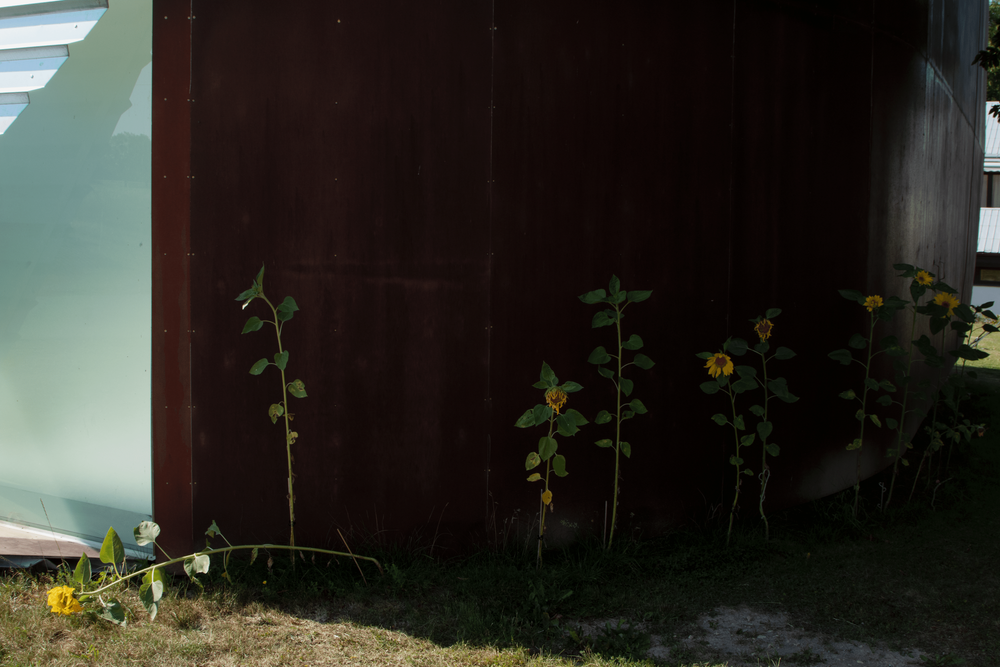
Cemetery Flowers is part of a long-term project in which the Pupil aims to create a shared seed bank in Lubna, in which volunteer gardeners would share and exchange with each other the seeds of plants they have successfully grown here in Lubna. The goal is both to map growing trends and tendencies among local gardeners and to support the harvest of individual gardeners, who would have the opportunity for a more diverse and fruitful garden thanks to the seed bank.
Curator: Adam Smrekovský