Something Different
Matěj Smetana
Matěj Smetana’s artistic practice has long been concerned with moving images and exploring their boundaries. His work often consciously refers to the beginnings of conceptual art and minimalism in the 1960s.
In his current work “Something Different,” he builds on some of his previous realizations, such as the work Prkno (2014) or Autumn Zoom (Olomouc 2010), in which he arranged gradually changing objects in sequences, creating a kind of frozen animation. In none of these works, however, does he deal directly with the phenomenon of indeterminacy.
It is hard to imagine a more inarticulate exhibition title than “Something Different.” In it, however, Smetana refers to the difficulties with human language and its current state. Today’s language—especially English—is characterized by the rapid emergence of words that attempt to describe previously unnamed phenomena, behaviors, or events. Terms such as “gaslighting,” “lovebombing,” “overkill,” or “doomscrolling” emerge in response to the need to name new forms of human action and technological phenomena.
Sometimes the desire to name a very specific phenomenon is driven by a desire to strip it of its mystery and bring it to light. This creeping process of demystification gradually deprives our contemporary world of mystery, indeterminacy, and indescribability.
But there is also a reverse process. The artist Jan Haubelt once aptly titled his exhibition “Impractical Mood”—a title that directly encouraged using the world impractically. When we walk through nature or a city without a map, we sometimes switch to a state of having no idea where we are. We may not know the name of the street or the direction of our path; we may get lost, wander, “un-name” what we see around us, and thus be constantly amazed and surprised.
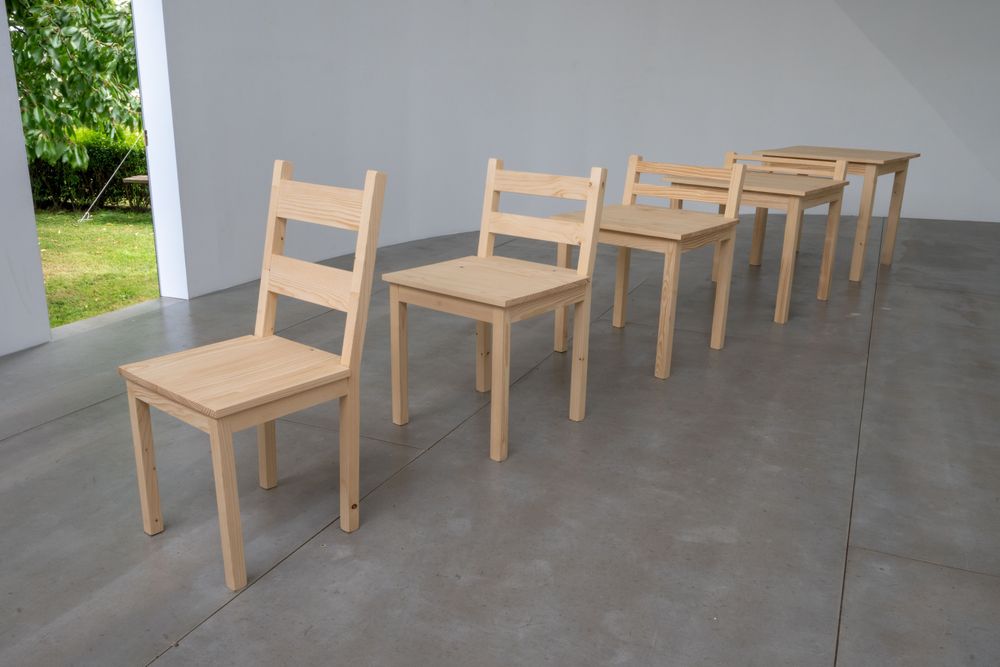
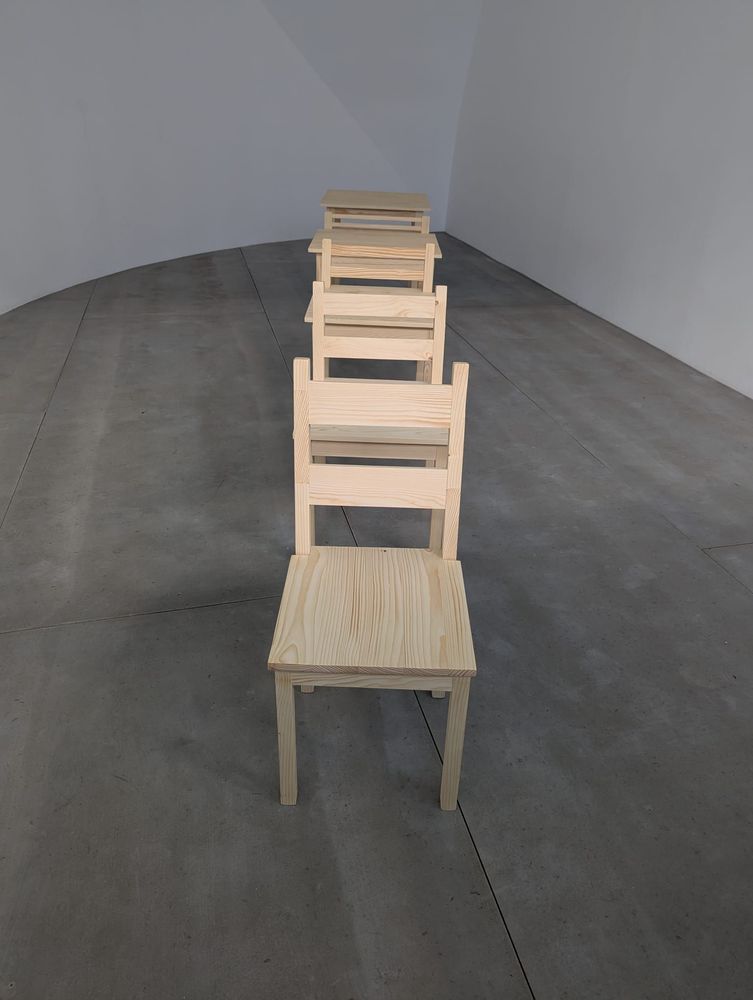
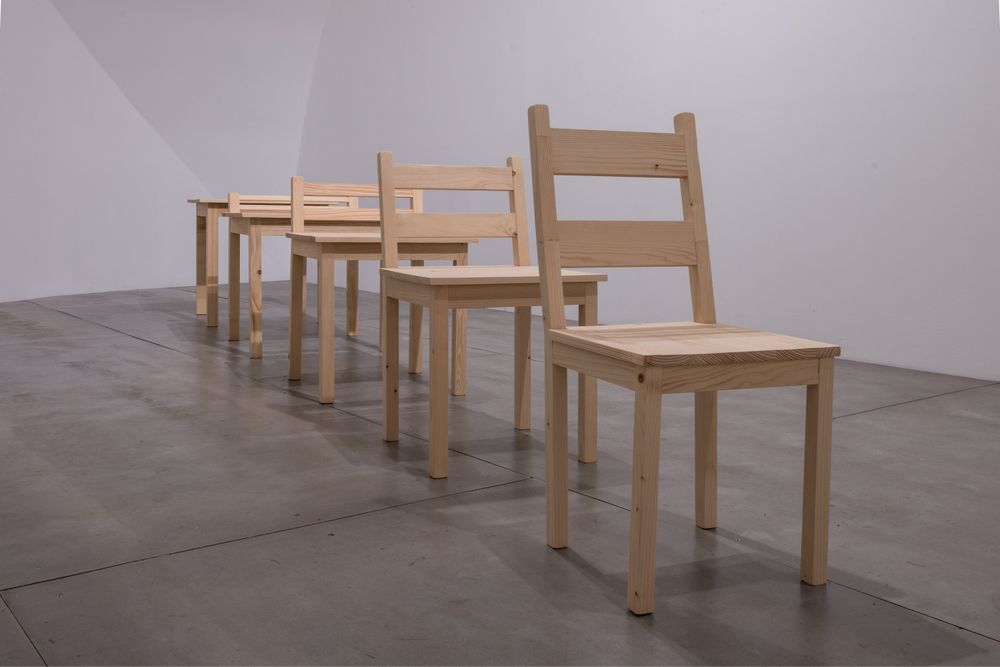
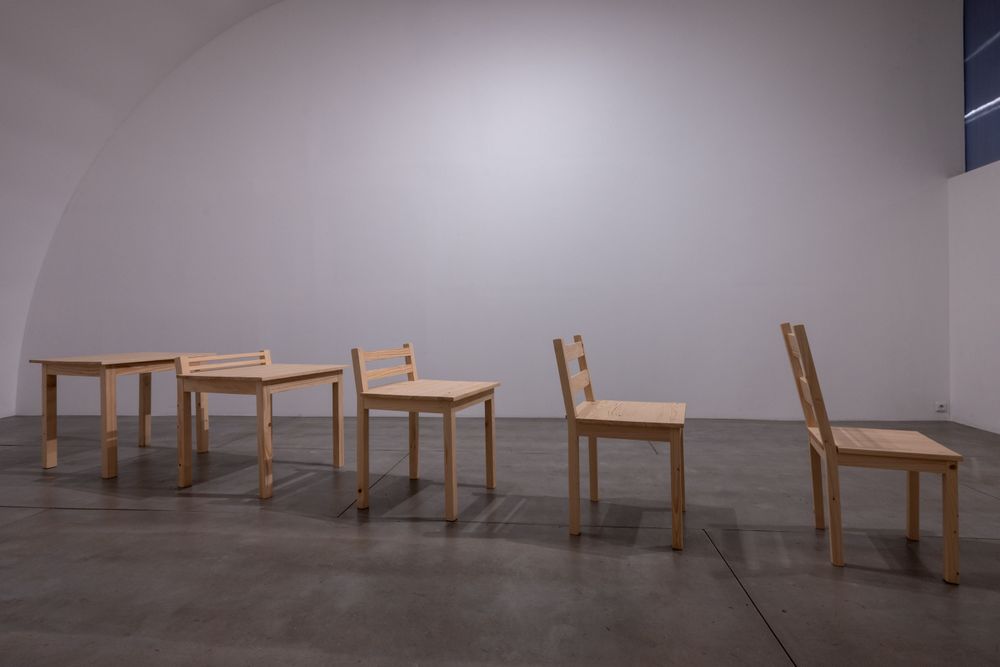
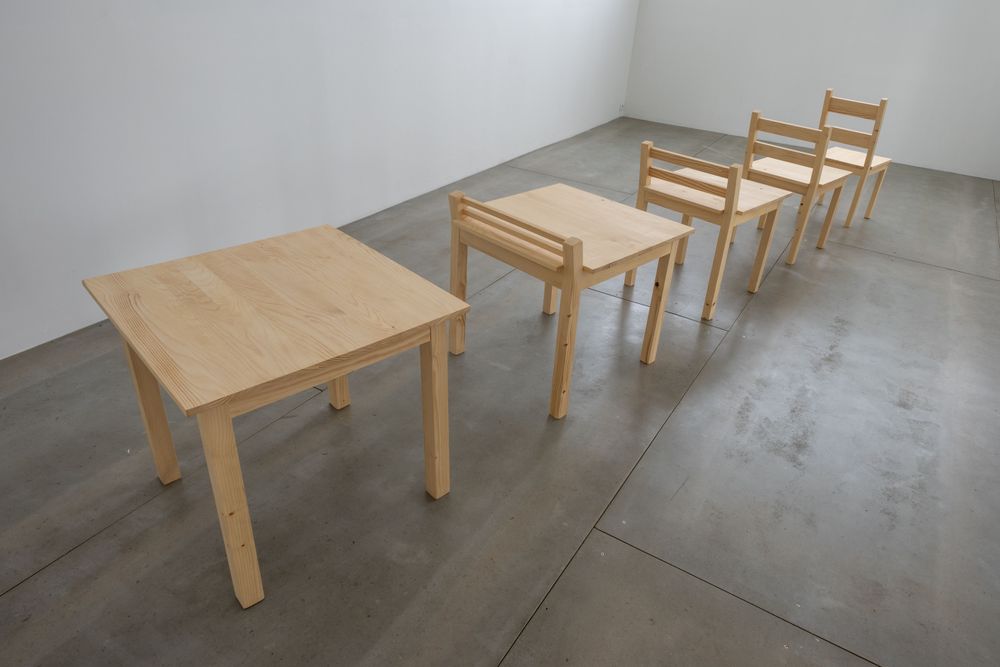
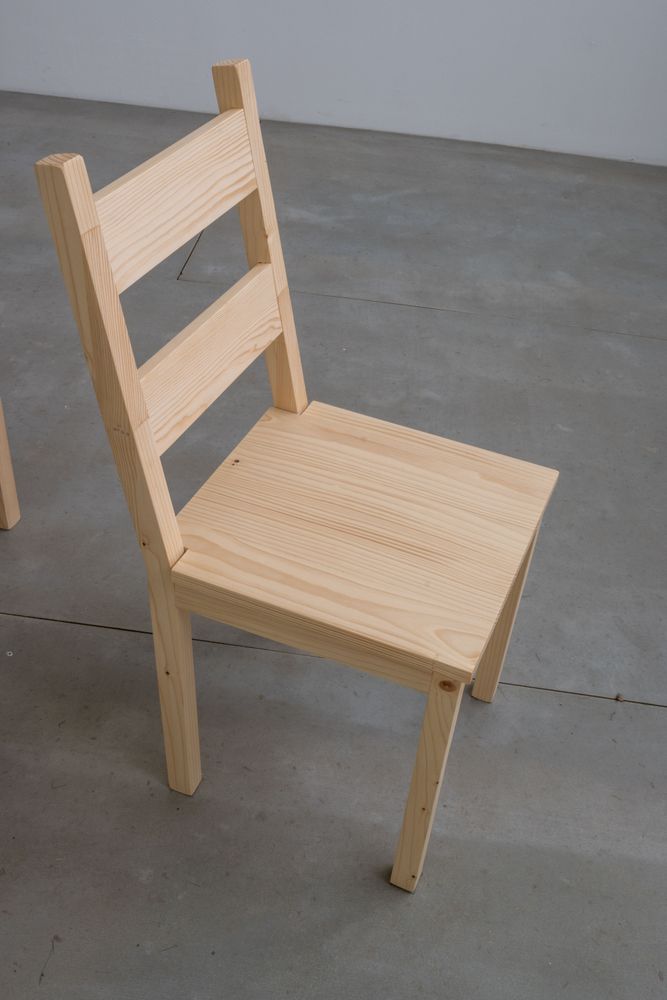
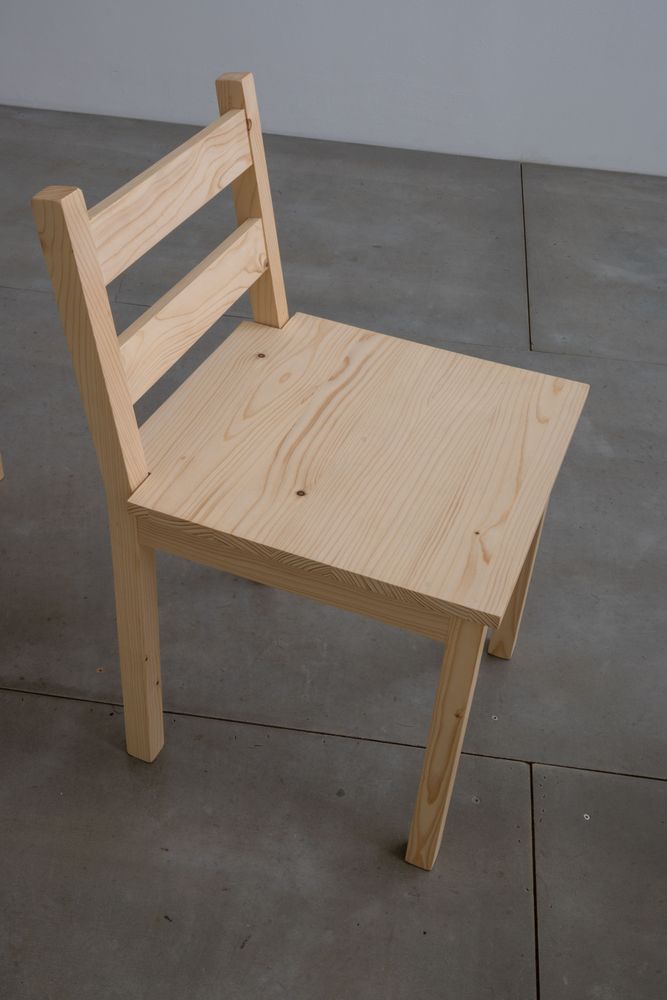
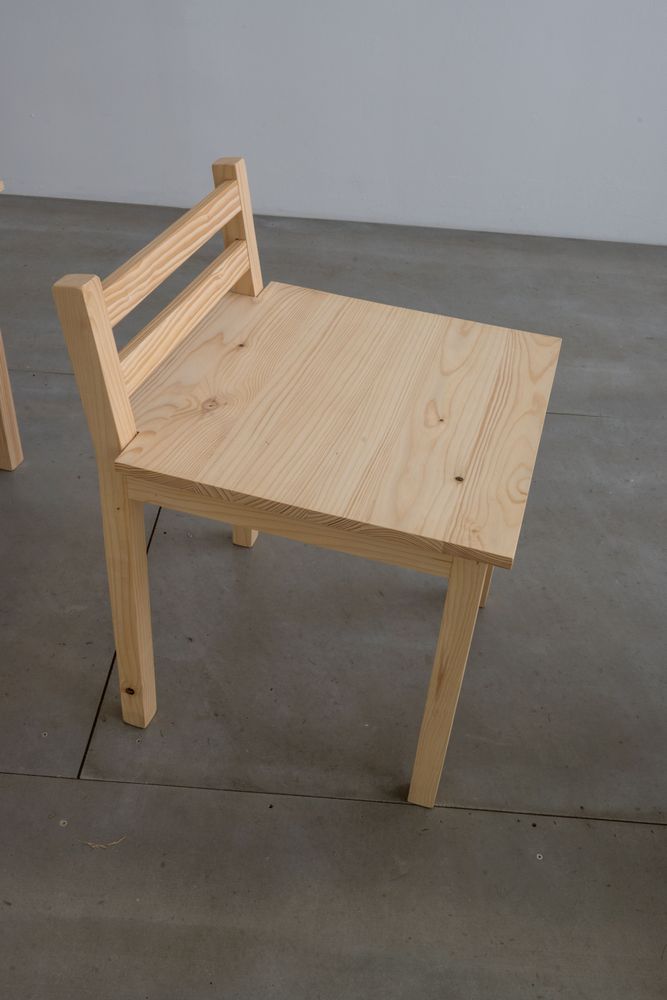
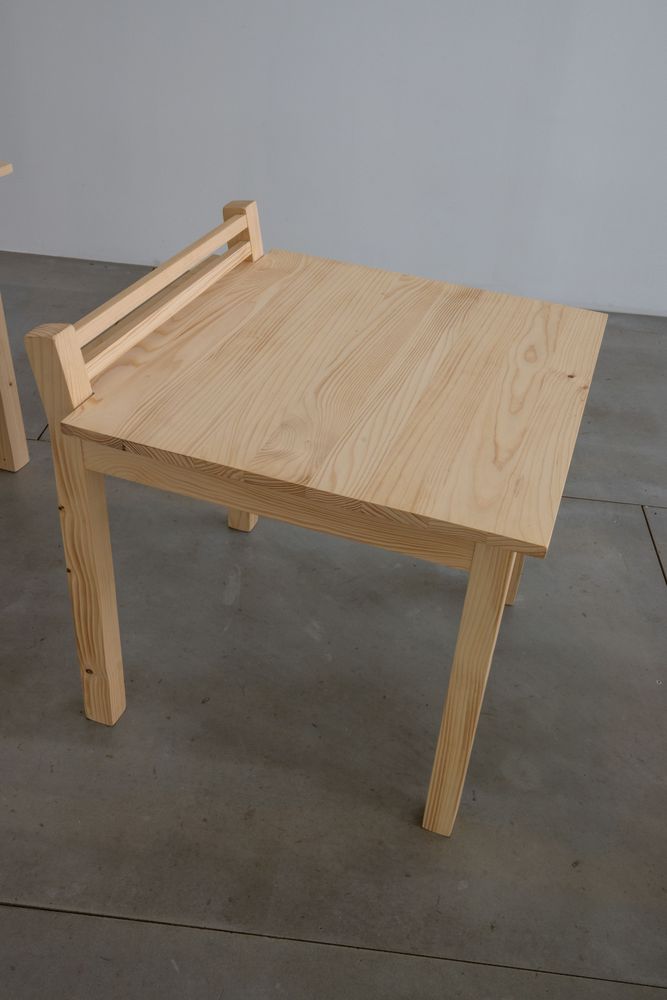
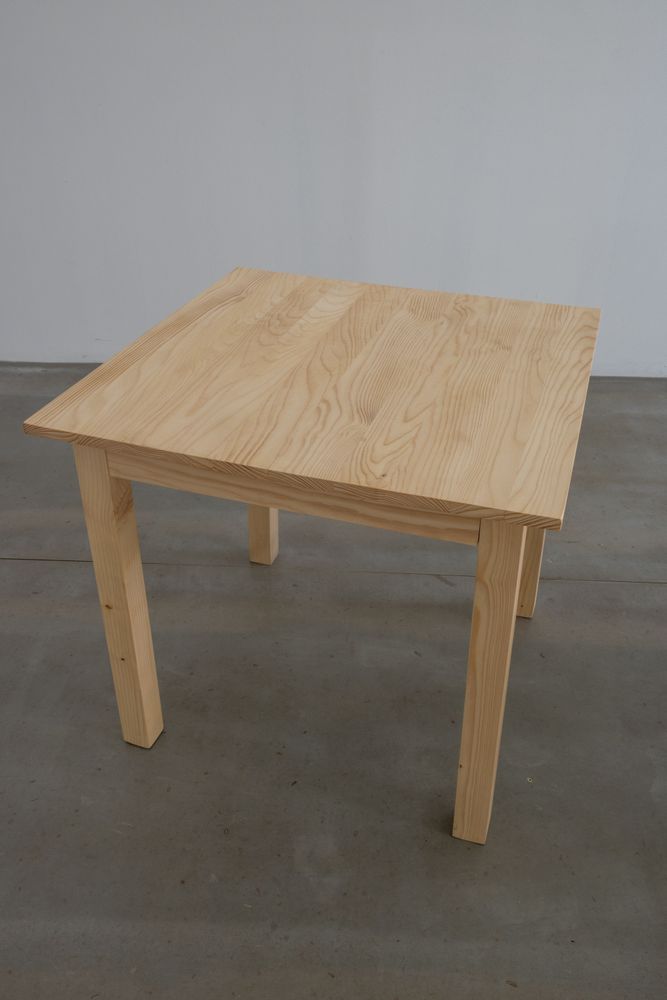
In the exhibition “Something Different” we see five objects lined up in a row. The initial object can be described as a table, the final one as a classic chair. But how do we label the objects in between? Towards the table the degree of “tableness” decreases; towards the chair the degree of “chairness” increases. Even if we can somehow describe these objects—for example, as “a lower table with a special handle”—they still remain somehow ambiguous, something in between, something different.
Individual objects can also be seen in relation to other objects in the sequence. We can observe their spatial relationships to each other, the gradual narrowing of the legs, or the lengthening of the backrest. Each object thus acquires its own meaning not only in itself but also in the context of the whole series.
Smetana creates phenomena and events without a predetermined function ora precisely defined position in the world and offers a use of the world guided by an impractical mood.