Collage
František Jugas & Petr Nápravník
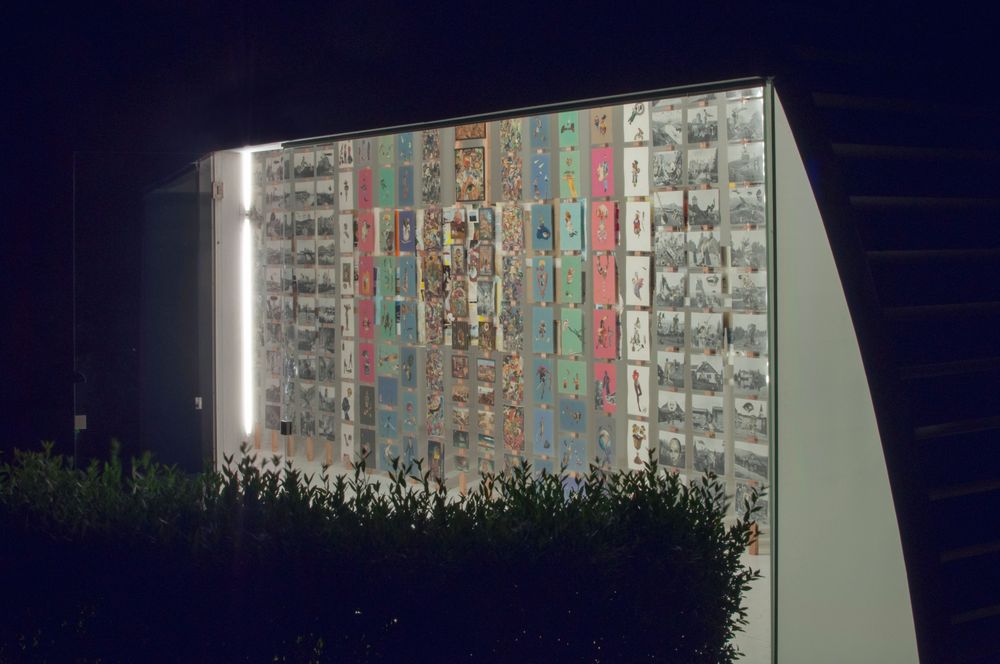
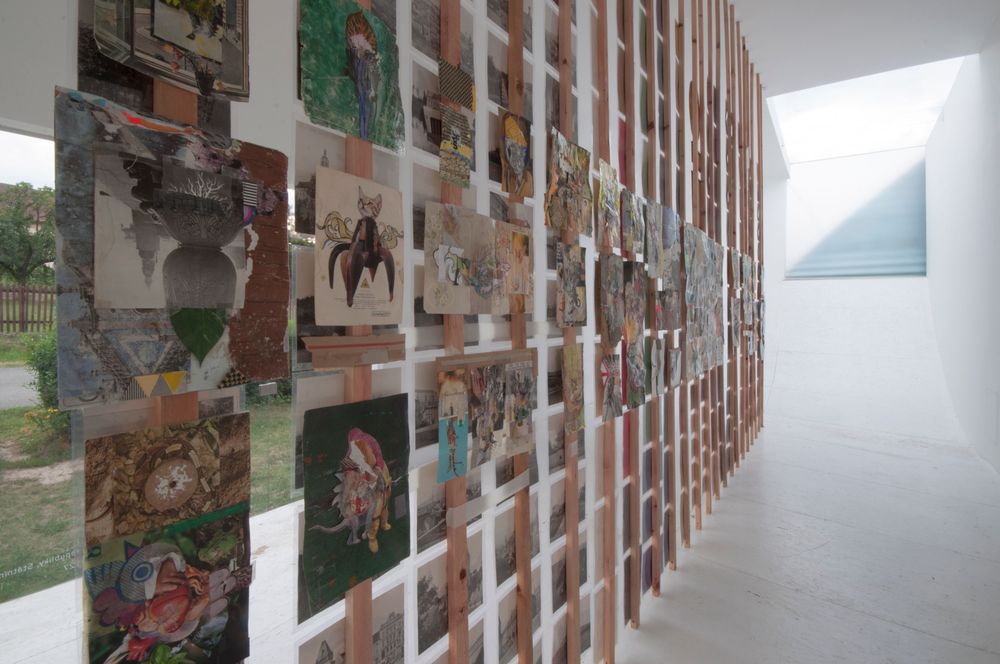
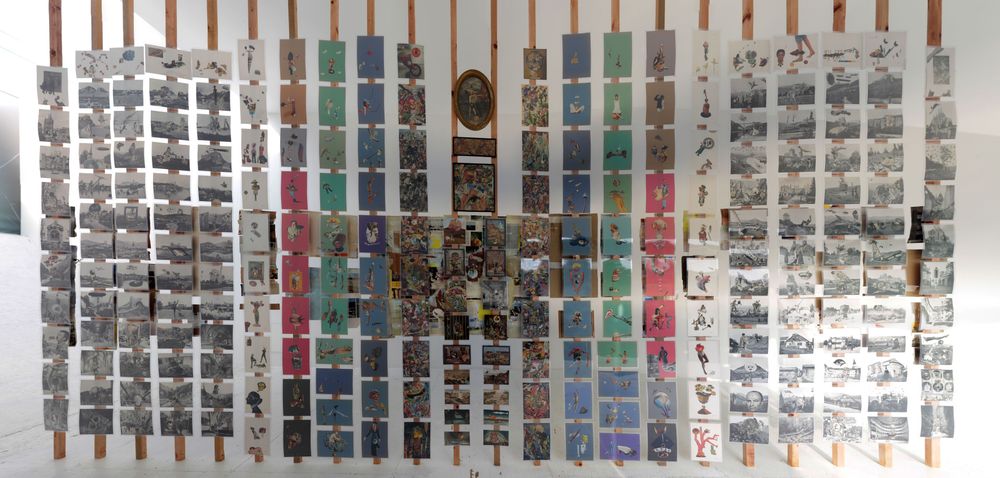
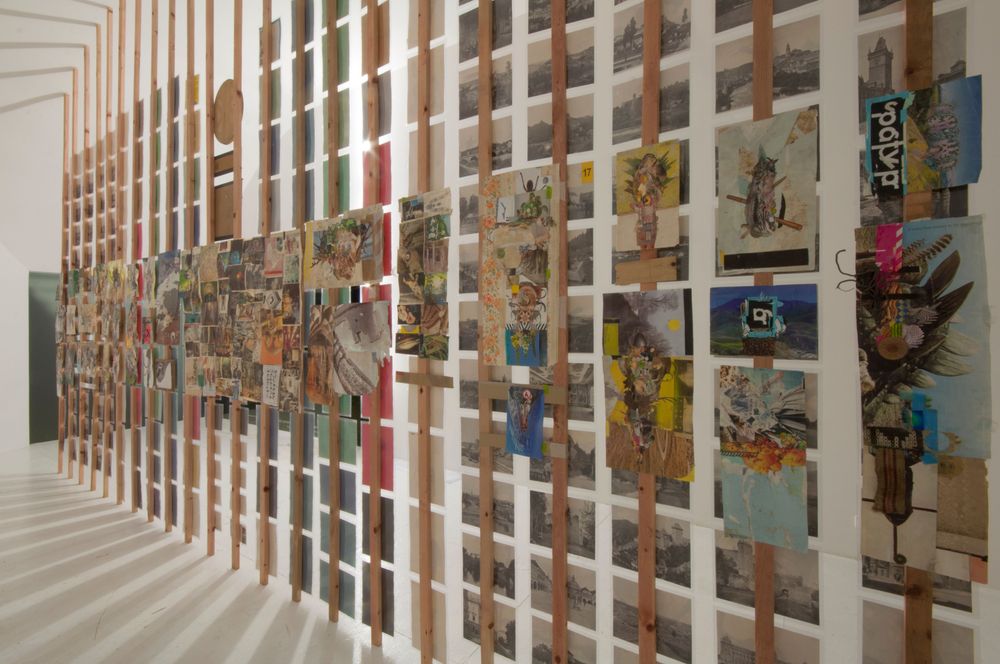
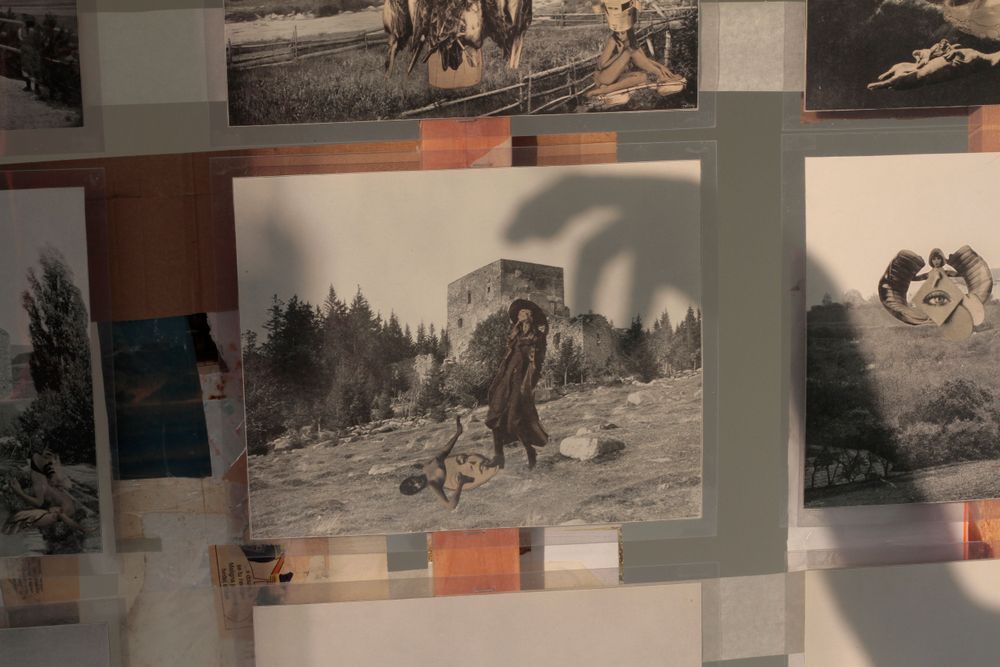
The exhibition Collages František Jugas (1944–1992) and Petr Nápravník (1986) was created on the basis of an inspiring interplay of coincidences. In 2019, Petr Nápravník, as a student at the Faculty of Fine Arts at Brno University of Technology, found in his sublease an extensive estate of František Jugas. In addition to correspondence and poetry in typescripts, the estate contains a large number of collages from 1971–1985. Coincidentally, Petr Nápravník devotes himself mainly to collages in which he uses variously degraded material. Therefore, he also first considered recycling the found work. After we looked at it together and deciphered the author’s autograph, the name led me to previous personal probes into Brno’s cultural life in the 1960s and 1990s years of the 20th century. Its, so far, the unprocessed chapter presents the phenomenon of the so-called Brno Bohemians, of which Jugas was a tribal participant.
The members of this community gradually gathered mainly due to the strong generational experience. Most of them were born during or shortly after World War II, in 1950. As a child, they underwent Stalinist education. Nevertheless, or precisely because of this, in the more open atmosphere of the 1960s, they got out of this past experience. They opened themselves to the present and had awareness of current art movements. They were interested in spiritual oriental currents. They were inspired by the philosophy of existentialism and absurdity, pataphysics, and Dadaist playfulness.
The elements of the absurd and pataphysics were expressed by the members of the Brno Bohemian in their works, and especially within their neo-Dadaist group. As a liaison, a kind of mascot, they chose Jan Novák, a literary active worker who had behind him incomplete studies at the Faculty of Arts of then J. E. Purkyně University. With his stern, left-wing view of a world whose norms he fundamentally deviated from, and at the same time with a completely self-contained perspective, he suited the spirit of this movement and inspired its activities. During the sixties, it was mainly various meetings, events, public proclamations of texts, trips, statements, etc. Everything was on the edge of the micro-community. With a few exceptions, the events were not documented. Today, they survive in the form of legends, which, moreover, were enhanced by the author’s elaboration of a kind of chronicle of this group by Pavel Řezníček in the novel Hvězdy kvelbu and its sequels.
It has not yet been devoted adequate attention to the phenomenon of Brno Bohemia together with the works of many of its members. For example, the work of František Jugas was almost forgotten. He was a civilian car bodybuilder. The labor profession connected him not only with other members of the Brno Bohemian but also with other contemporaries, such as Vladimír Boudník. The artistic and literary works of František Jugas intertwine themselves. Most of his works fit in A4 format and have a literary subtext.
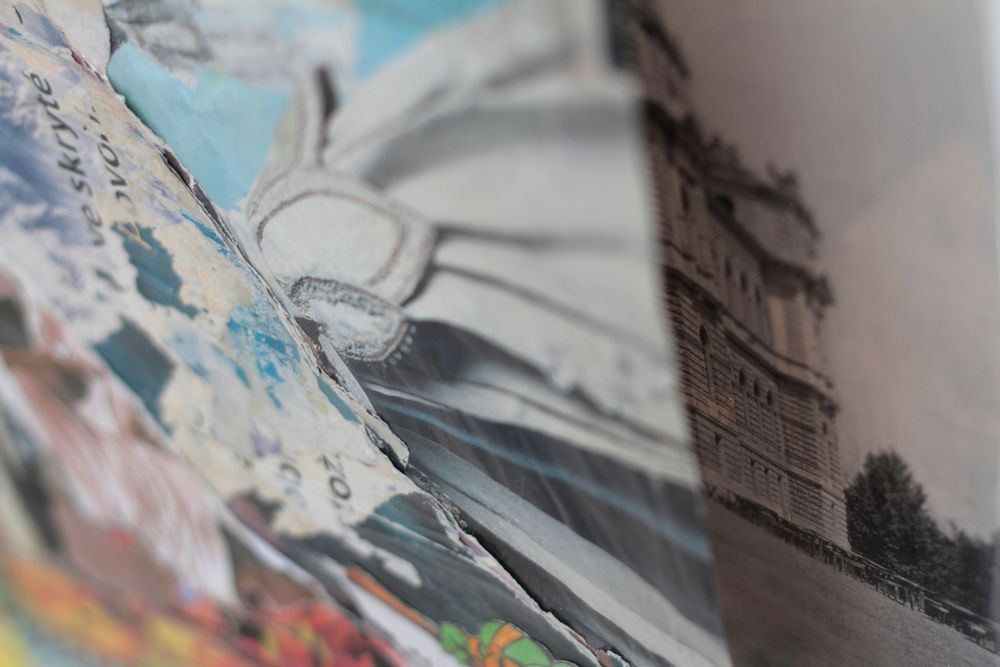
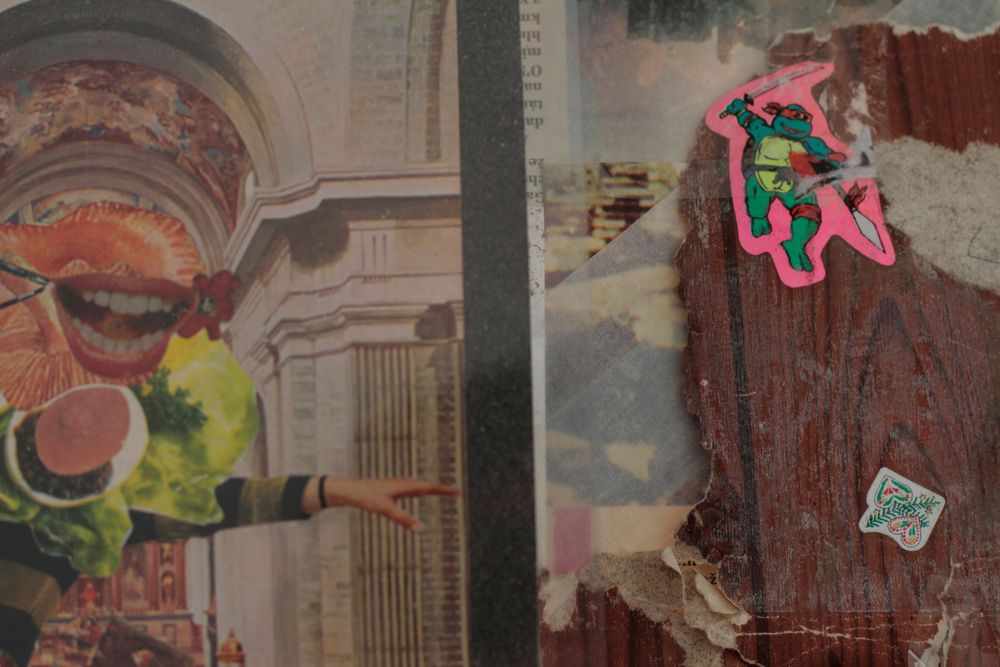
Petr Nápravník, on the other hand, does not like working with a fixed format. His collages stem from a fascination with the aesthetic qualities of the faded material, often unfolding from the concentrated center to the asymmetrical edges, which have the potential to further develop into space. He Is fascinated by the border of ornament and narration. Although he expresses himself by contemporary language, he keeps a distance from the new by using archaic forms and materials.
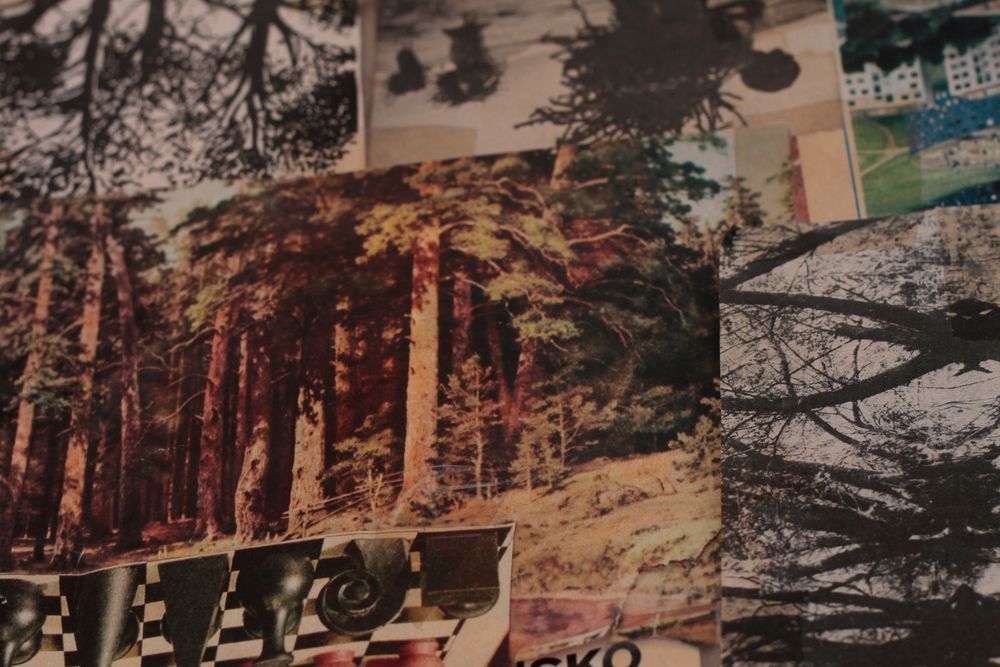
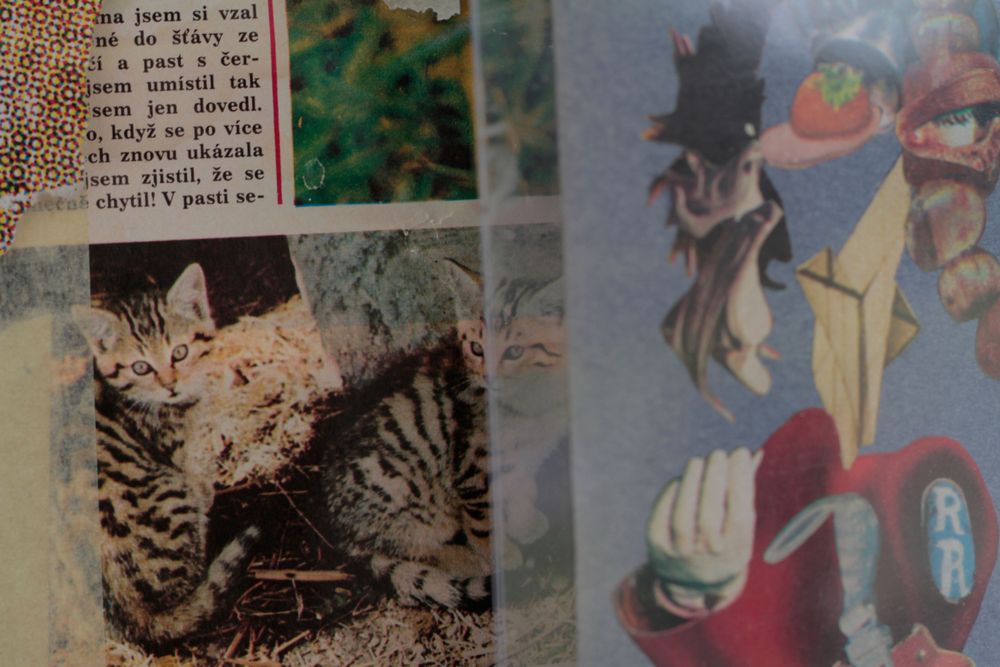
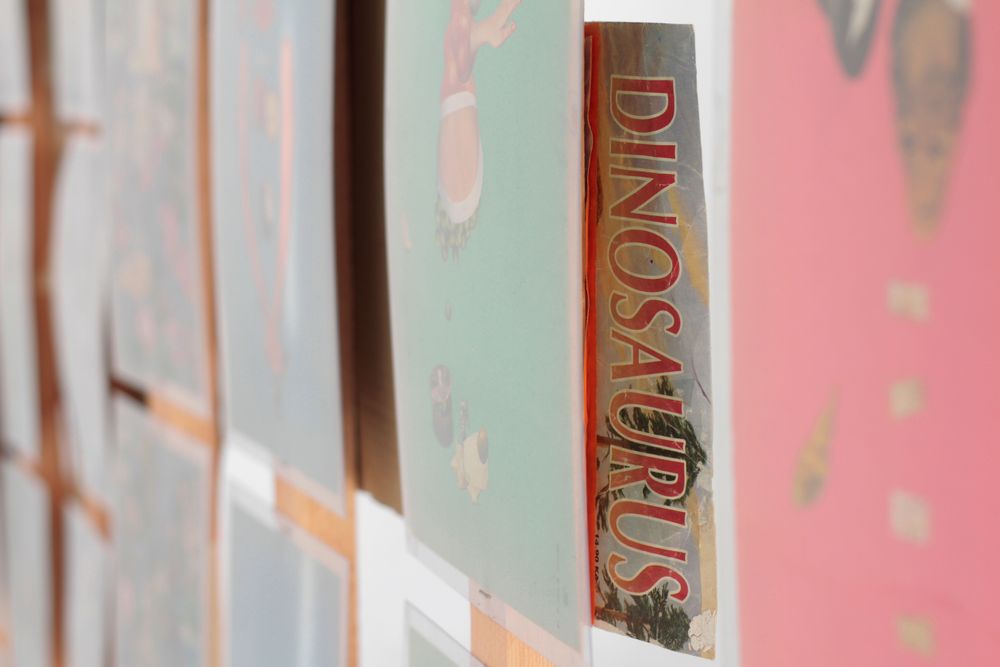
In this regard, our exhibition spans an interesting arc of the time, when on the one hand Jugas worked with a limited range of available publications, which certainly fascinated him in its exclusivity at the time. It should be noted that this was at a time when color prints did not normally go as mailbox spam when advertising and visual smog did not flourish as they do today. And on the other hand, Nápravník, who is currently working with often related material from about the same time. But most of the time he finds the material as trash in containers.
Text author and curator: Bára Klímová